

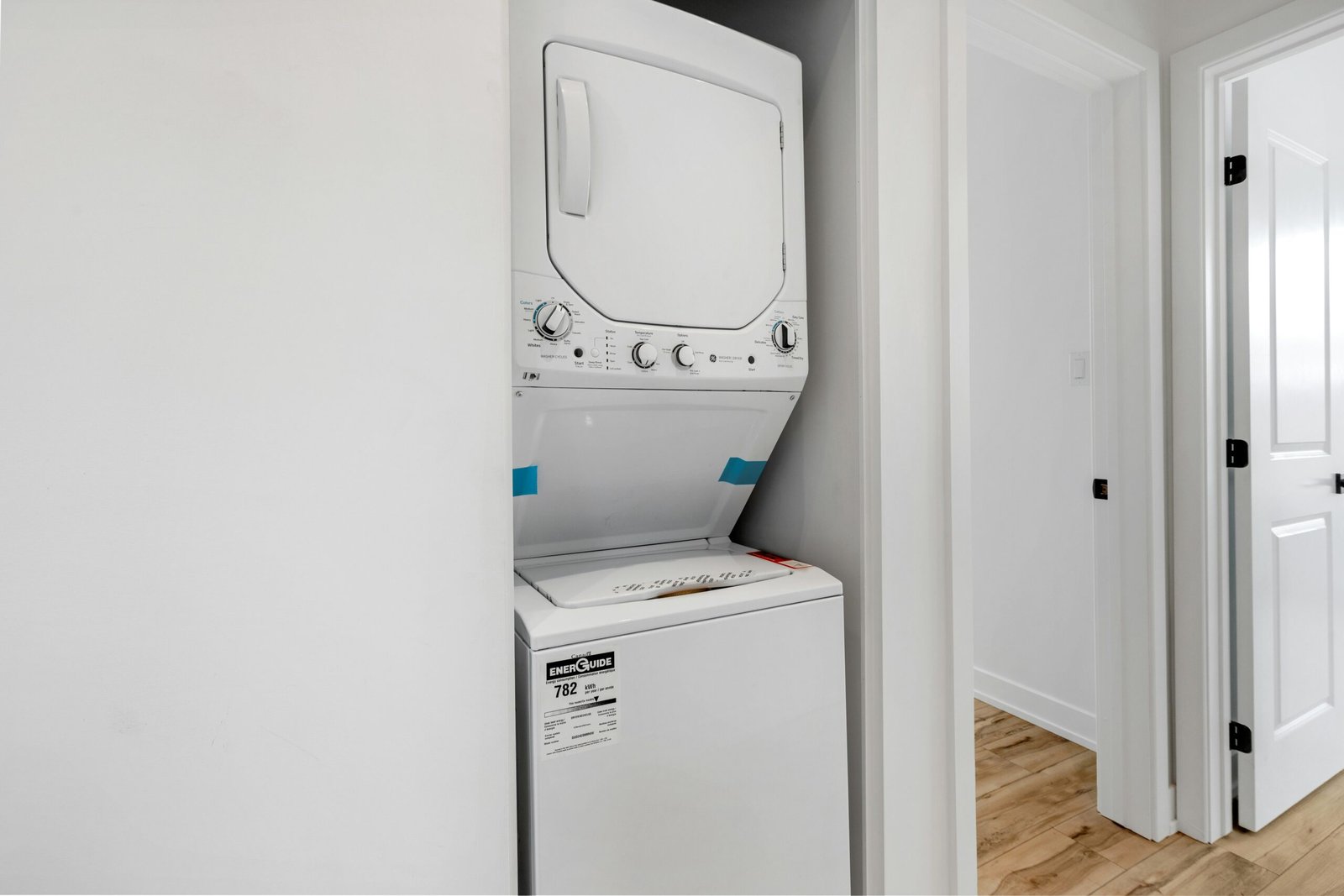
You find an apartment that checks every box except one: there are no washer and dryer hookups. For many renters, this feels like a dealbreaker, forcing a choice between a shared laundry room, regular trips to a laundromat, or passing on an otherwise perfect place. But the absence of hookups does not actually rule out doing laundry at home. A range of solutions exists that require nothing more than a standard electrical outlet and access to cold water, allowing renters to have private, in-unit laundry even in apartments that were never plumbed for it. Understanding these options, how they work, what they cost, and their trade-offs is valuable for renters weighing a lease and for landlords thinking about how to make a unit more attractive.
This piece covers the practical solutions for washing and drying clothes without dedicated hookups, from portable machines to all-in-one combo units to no-installation drying methods, and examines what in-unit laundry means for the value of a rental.
Understanding the Hookup Problem
Before considering solutions, it helps to understand what washer and dryer hookups actually are and why so many apartments lack them. Apartments typically offer a few different laundry arrangements. Most apartment communities have a shared laundry room, some apartments have washer and dryer hookups for private machines, and a rare few communities include washers and dryers in the unit. The most common situation, however, is apartments without hookups, particularly when renting in New York or other major cities where older buildings and space constraints mean the proper plumbing and venting for a traditional washer and dryer were never installed.
A conventional washer and dryer setup requires dedicated connections: hot and cold water lines, a drain, a 240-volt outlet for most electric dryers, and, for a vented dryer, a duct to the outside. An apartment without hookups lacks these dedicated fixtures. The good news is that the solutions designed for hookup-free living sidestep these requirements, needing only what almost every apartment already has: a standard 120-volt electrical outlet and access to a cold water source, usually a sink faucet.
Portable Washing Machines
Portable washers are among the most popular solutions for apartments without hookups, and understanding how they work clarifies why they fit these spaces so well. Portable washers and dryers are designed to work in homes and any space that does not have washer and dryer hookups. These compact and efficient appliances allow you to do laundry privately in any location with an outlet and a sink, and they are often designed for apartments and RVs, with many labeled compact rather than portable in product names.
The mechanics are simple. A portable washer is a small washing machine that runs using only a normal power outlet and a sink with two hoses. One hose is the water inlet line, which connects to the sink faucet and allows the washer to fill without a dedicated utility water fixture. The second hose is the drain, which points down into the sink so used water can leave the washer safely. While clean water pumps into the washer, dirty water pumps back out into the sink, similar to how a portable dishwasher operates. This means the machine must be hooked up to the sink while in use and disconnected afterward, so it needs to be set up each time you want to run a load, then rolled away and tucked into storage between uses.
Portable washers are compact, generally ranging around three feet high and two feet wide, and light enough to move without difficulty. Capacity is the main trade-off. Ultra-compact models for small apartments range from about 1.6 to 2.6 cubic feet, and to put that in perspective, a 1.6 cubic foot machine can wash roughly two whole outfits, a hoodie, one pair of jeans, and a dress in a single load. For a single person or a couple, this is manageable, though it means running smaller, more frequent loads than a full-size machine would require.
Washer-Dryer Combos
For renters who want both washing and drying in one machine without hookups, the washer-dryer combo is often the ideal solution, and it has real advantages worth understanding. Washer-dryer combos are all-in-one machines that wash and dry laundry in a single unit, which means no transferring wet clothes from a washer to a separate dryer. Because these combo units are small and portable, they can be used without hookups, requiring only a standard 120-volt electrical outlet and a connection to cold water. You can also hook a combo up to your sink, usually with the help of a portability kit.
These machines are particularly popular in high-density areas of Europe and Asia, where space comes at a premium, and while they have not fully caught on in the United States yet, the rise of tiny homes and small apartments is creating growing demand for apartment-sized solutions. A washer-dryer combo operates like a regular washing machine during the wash cycle, using water and detergent, and most combos also offer wash-only and dry-only options.
The key distinction among combos is how they handle drying, and this matters significantly for apartments without hookups. A ventless washer-dryer combo dries clothes using a condensation method, heating air to evaporate moisture from the clothes and then using built-in condensers to recycle water and control lint, with exhaust fans removing moisture from the unit after each cycle. A vented combo, by contrast, functions like a traditional dryer and must be vented to the outside through a duct or external wall. In most cases, a ventless unit is the best choice for apartments, second homes, and boats with limited space, because an apartment without hookups certainly will not have a venting system. A vented combo only makes sense if an existing venting system is already in place.
Cost is a consideration with combos. You can expect to pay as little as $900 up to $2,000 for a new washer-dryer combo, depending on the type of all-in-one unit you choose. Installation, while it may seem confusing, can be managed by breaking the process into steps, and a portability kit, available at home improvement stores, includes the tools and hardware needed to connect the unit to a sink.
Air Drying and No-Installation Options
Not every solution requires a machine, and the simplest options need no installation or hookups at all. Indoor air drying is completely practical and easy for apartment residents using a clothesline or a portable drying rack. This is the simplest solution available and requires no hookups whatsoever, making it an affordable and apartment-friendly option.
Air drying pairs naturally with a washing solution that also avoids hookups. If you use a portable washer for the washing and then air-dry the results, you have a complete hookup-free laundry system at minimal cost. Even hand-washing combined with air drying is a viable approach for small laundry volumes or delicate items. For renters focused on keeping costs down or living in very small spaces, the combination of a portable washer or hand-washing with a drying rack addresses the entire laundry process without any installation, venting, or dedicated plumbing.
A related approach for the washing side is a portable washer with a high-speed spin option, which leaves clothing almost dry, though not completely, at a very cheap budget with the simplest installation. Pairing this with air drying finishes the job. This kind of setup represents the most economical path to private laundry in an apartment without hookups, trading the convenience of a full drying cycle for significant savings and simplicity.
What This Means for Renters and Landlords
For anyone evaluating an apartment or a rental property, the question of laundry without hookups carries real weight, because in-unit laundry is one of the most sought-after amenities in the rental market.
For renters, the key insight is that an apartment without hookups does not have to mean giving up private laundry. Before passing on an otherwise ideal unit, it is worth understanding that a portable washer, a washer-dryer combo, or even a simple washer-and-drying-rack combination can provide in-unit laundry using only a standard outlet and sink access. The trade-offs to weigh are capacity, since these machines run smaller loads; the setup routine, since portable units must be connected and disconnected for each use; and cost, ranging from inexpensive drying racks to combo units running up to $2,000. Renters should also confirm with their landlord that portable machines are permitted, since some leases have restrictions, and verify that the unit has the necessary outlet and accessible cold water source before committing to a purchase.
For landlords and property investors, laundry is a significant factor in a unit’s appeal and rentability. In-unit laundry consistently ranks among the amenities renters most want, and its absence can make a unit harder to rent or command a lower price, particularly in competitive markets. A property without hookups sits at a disadvantage against comparable units that offer in-unit laundry, which affects both the pool of interested renters and the achievable rent. Landlords weighing improvements to a rental should consider that adding proper washer and dryer hookups, or even providing a compact combo unit, can meaningfully enhance the property’s appeal and justify higher rent. Where full hookups are impractical due to the building’s age or plumbing constraints, informing prospective tenants that the unit accommodates portable or combo machines can help offset the disadvantage of lacking dedicated hookups.
The broader point is that the presence or absence of in-unit laundry, and the ease of adding it, is a genuine element of a rental property’s value. Renters increasingly expect the convenience of doing laundry at home, and the solutions for apartments without hookups mean that even units never designed for laundry can offer it. For renters, this expands the range of acceptable apartments; for landlords, it represents both a competitive consideration and an opportunity to improve a property’s standing in the market. Understanding these hookup-free options allows both sides to make better decisions about a feature that matters more to renters than almost any other.
FAQ
Can you have a washer and dryer without hookups?
Yes. Several solutions allow in-unit laundry without dedicated hookups, requiring only a standard 120-volt electrical outlet and access to cold water, usually from a sink faucet. Portable washing machines connect to a sink with two hoses for water in and drainage out. Washer-dryer combos wash and dry in a single all-in-one unit using the same basic connections. And air drying with a rack or line requires no installation at all. None of these need the dedicated water lines, drain, 240-volt outlet, or venting that a traditional washer and dryer require.
How does a portable washing machine work without hookups?
A portable washer runs using a normal power outlet and a sink with two hoses. One hose connects to the sink faucet as the water inlet, allowing the machine to fill without a dedicated water fixture, while the second hose points down into the sink drain so used water can leave safely. Clean water pumps in while dirty water pumps out, similar to a portable dishwasher. The machine must be connected to the sink while running and disconnected afterward, so it is set up for each load and then stored away between uses.
What is a washer-dryer combo and does it need hookups?
A washer-dryer combo is an all-in-one machine that both washes and dries laundry in a single unit, eliminating the need to transfer clothes between machines. It does not require special hookups, only a standard 120-volt outlet and a cold water connection, which can be made to a sink using a portability kit. Combos are popular in space-constrained parts of Europe and Asia. For apartments, a ventless model is usually best, since it dries clothes through condensation rather than requiring a vent to the outside, which an apartment without hookups will not have.
What is the difference between a vented and ventless washer-dryer combo?
A ventless washer-dryer combo dries clothes using a condensation method, heating air to evaporate moisture and using built-in condensers to recycle water and control lint, with exhaust fans removing moisture after each cycle. It requires no external venting, making it ideal for apartments, second homes, and boats. A vented combo works like a traditional dryer and must be vented to the outside through a duct or external wall. For an apartment without hookups, a ventless unit is almost always the right choice because there is no existing venting system.
How much does a washer-dryer combo cost?
A new washer-dryer combo typically costs between $900 and $2,000, depending on the type and features of the all-in-one unit. This is a higher upfront cost than a basic portable washer paired with air drying, which represents the most economical hookup-free option. When weighing the cost, renters should consider the convenience of an all-in-one unit against the smaller capacity these machines offer and the setup routine required if the unit connects to a sink rather than a permanent water source.
Does in-unit laundry affect a rental’s value?
Yes, significantly. In-unit laundry is one of the most sought-after amenities in the rental market, and its absence can make a unit harder to rent or force a lower price, especially in competitive markets. A property without hookups is at a disadvantage against comparable units offering in-unit laundry. For landlords, adding proper hookups or providing a compact combo unit can enhance a property’s appeal and support higher rent, while informing prospective tenants that a unit accommodates portable or combo machines helps offset the disadvantage of lacking dedicated hookups.




Laisser un commentaire